Trump creates a "Super Intelligence Force"
President Trump formally announces a federal AI task force to keep the US leading in "super intelligence", led by Director of National Intelligence Jay Clayton with the heads of the FTC, defence research and federal personnel. The announcement gives few details on its powers.
What happened
On Sunday morning, 4 October, Trump posted on Truth Social:
The Super Intelligence Force is tasked with coordinating the effort of the Federal Government to ensure that America continues to lead the World in Super Intelligence, which many say is bigger than the Industrial Revolution, and the Internet, and will protect the interests, and improve the lives, of all Americans.
He added that the force “will coordinate the Federal Government’s engagement with Consumers, Public Interest Groups, Religious Organizations, Critical Infrastructure Providers, and Super Intelligence Companies.” According to NBC News, Trump said he was forming the group following the “Historic White House Accord on Super Intelligence”, and that it would report to him and to White House chief of staff Susie Wiles.
ABC News noted that the announcement was “thin on details”, with no specific action or oversight power over AI development. A request from ABC to the White House for more information did not immediately receive a response.
Who is in charge
According to ABC News and NBC News, Trump named:
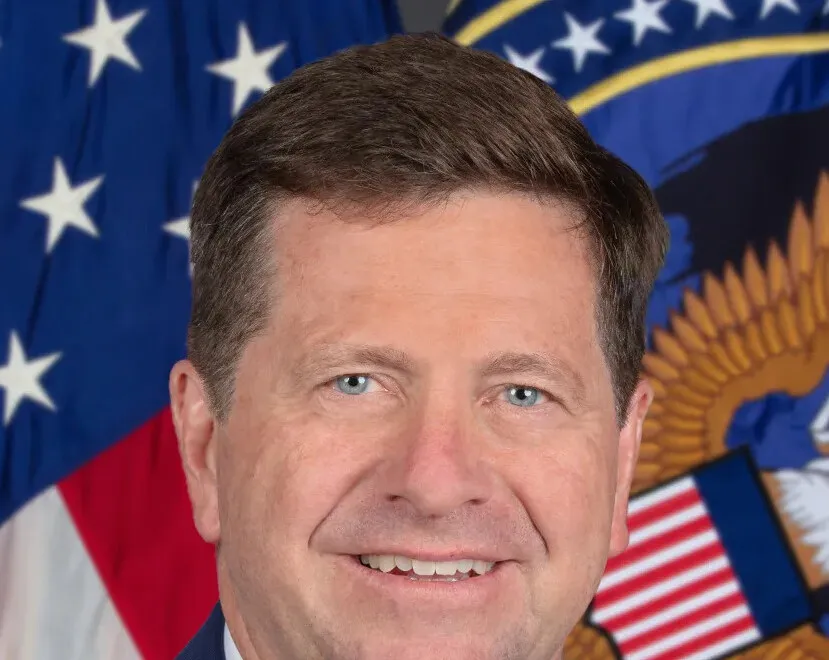
- Jay Clayton, Director of National Intelligence, as chair. He was previously US attorney for the Southern District of New York and chair of the Securities and Exchange Commission (NBC). According to Quartz, he will keep his intelligence post while taking on the AI role, in effect becoming the administration’s new AI czar. The previous czar, venture capitalist David Sacks, left in March after reaching the time limit for special government employees.
- Andrew Ferguson, chair of the Federal Trade Commission;
- Emil Michael, the Pentagon’s under secretary for research and engineering;
- Scott Kupor, director of the Office of Personnel Management.
TechCrunch and Quartz, citing The Wall Street Journal, added who does what: Michael will be the liaison to AI companies; Kupor will handle outreach to critical-infrastructure providers and other industry groups; and Ferguson will cover consumer interests, including religious communities, children’s advocates, and privacy and free-expression groups. Members will also include Vice-President JD Vance, Defense Secretary Pete Hegseth, Treasury Secretary Scott Bessent and chief of staff Susie Wiles, with Sacks and former Secretary of State Condoleezza Rice as advisers, Rice focusing on national security.
What it is supposed to do
Trump’s post gave only the goal. More detail comes from the group’s charter, as reported by The Wall Street Journal and relayed by TechCrunch and Quartz:
- Deadline for a report on risks and opportunities
- 120 days
- Vice-chairs
- 3
- Reports to
- The president and chief of staff
Sources: The Wall Street Journal (as reported by TechCrunch and Quartz); NBC News
- Assess and define responsibilities. Within 120 days, assess AI’s risks and opportunities and set out what the federal government is responsible for. The work could be extended, or handed over to a government agency.
- Respond to threats without overregulating. The charter tells the group to “develop plans for responding to SI-enabled threats to our society, while preventing overregulation and regulatory capture that would stifle innovation and competition”.
- Check the alarm system. Audit how the government currently receives alerts about breaches, hacks and “jailbreaks” (ways of getting around AI safety limits), and find improvements it can make with powers it already has.
- Companies stay in front. According to the Journal, officials said the private sector will remain the main driver of risk management, with the task force supporting rather than directing.
What Clayton says
In an interview with The Wall Street Journal, quoted by ABC News, Clayton said: “The risk of not being first is high. Not being first increases the identified, and unidentified, risks, particularly from our adversaries. Being first will better enable us to address those risks on behalf of the American people.”
He said: “I expect there will be mechanisms developed in dialogue, just like there are in other industries”, pointing to risk models the financial industry developed with the Federal Reserve and the SEC. He said the task force would examine current law and discuss possible action by Congress. He called its members “serious people” who “are committed to doing this so that America wins the AI race”.
How we got here
- 119 SeptemberTrump promises an "AI Force", likening it to the Space Force.
- 229 SeptemberVoluntary White House accord; AI renamed "Super Intelligence".
- 3Around 2 OctoberReports say Clayton will be AI czar.
- 44 OctoberThe Super Intelligence Force is announced.
- 5In about four monthsIts report on risks and opportunities is reportedly due.
Sources: ABC News, NBC News, TechCrunch, Quartz
When he first announced the “AI Force” on 19 September, Trump wrote that “we will not in any way hinder or stifle the Growth of this incredible Industry”, and that the “BAD” side of AI could be handled “very easily, with our already existing Criminal and Civil Justice System”.
Reactions
- The regulation debate. ABC News reported that some tech chief executives had raised concerns and called for federal regulation, which Trump’s announcement did not address. In July more than 1,100 AI industry workers had asked the US government to back tools to pace AI development (see 1,100 AI insiders ask the US to be ready to slow AI).
- Public opinion. Quartz cited a Reuters/Ipsos poll finding that roughly 73% of Americans believe AI companies have fallen short on preventing serious harm to society.
- Congress and the states. According to the San Francisco Standard, Senator Bernie Sanders introduced a “Ban Artificial Superintelligence Act” in late September. NBC noted that politicians such as California governor Gavin Newsom have sought to regulate AI at state level.
Things to keep in mind
- Most details come from press reports. The division of roles, the 120-day deadline and the charter’s wording come mainly from The Wall Street Journal, relayed by other outlets; the White House did not immediately answer ABC News.
- No powers or budget described. It is unclear whether the group can require companies to do anything, or what happens if they don’t.
- The emphasis is on staying ahead. Both the charter’s wording and Clayton’s comments frame the job as keeping the US first while avoiding “overregulation”, not pausing or slowing AI.
What it means for ordinary users
In the short term, the task force will not change any AI product you use. It works more like a coordinating hub, bringing together the heads of intelligence, defence research, consumer protection and the federal workforce to work out what the government should and shouldn’t do about AI.
The thing to watch is the report due in about four months: what specific measures it proposes, whether it recommends that Congress act, and whether the companies’ voluntary White House accord (see Trump says AI leaders signed a self-policing “constitution”) gets any real checking.